
Constitutional reform : What problem are we trying to solve ?
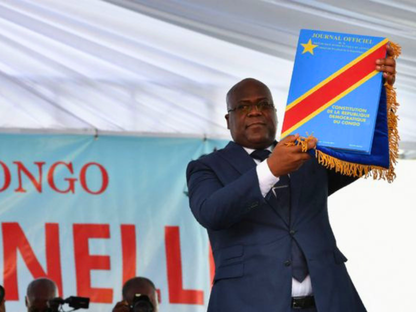
For months, public debate in the Democratic Republic of the Congo has revolved around a single question: should the Constitution be amended? Yet one far more fundamental question has received surprisingly little attention: what problem is this reform actually intended to solve? From Ouagadougou to Nairobi, Africa’s constitutional experience offers an important lesson. Constitutional reform, in itself, guarantees neither progress nor stability. When it is not grounded in a rigorous diagnosis of the challenges a country faces and supported by an inclusive process, it can become a source of instability rather than a solution. Introduction Constitutional reform has become one of the defining issues in public debate in the Democratic Republic of the Congo. Positions are becoming increasingly polarized and concerns are mounting. For some, the 2006 Constitution no longer responds to the country’s contemporary challenges and should therefore be revised to improve the effectiveness of public action. For others, it remains one of the country’s main safeguards against the abuse of power, and any amendment to the constitutional framework risks weakening the democratic balance established over the past two decades. This debate is normal, legitimate and, indeed, healthy in any democracy. A constitution is neither immutable nor untouchable. Every democracy may, at times, need to adapt its institutions as circumstances evolve. But before debating reform, one question should come before all others: What problem is this reform intended to solve? At first glance, the question may seem self-evident. Yet it is rarely at the heart of the public conversation. The debate often begins with the proposed solution long before there is any agreement on the nature of the problem. However, a proper diagnosis should come before the solution. A physician does not prescribe treatment before making a diagnosis. Why should it be any different when it comes to the fundamental pact that governs the life of a Nation? This article does not seek to argue either for or against constitutional reform. Instead, it invites readers to shift the debate towards a more fundamental question: how can we determine whether constitutional reform is genuinely necessary? Drawing on the Congolese debate as well as the experiences of other African countries, it argues that before changing the rules of the game, a democracy must first reach a shared understanding of the problem it is trying to solve. I. The Congolese Constitutional Debate: A Solution in Search of Its Problem In the DRC, the Constitution now seems to bear the weight of every national frustration: when institutions fail to deliver the expected results, when governance falls short, when insecurity persists, or when development continues to fall below citizens’ expectations. After nearly two decades of implementation, it is only natural that citizens, academics, political leaders and civil society organizations should question how certain institutions function and whether some constitutional mechanisms remain fit for purpose. These debates often lead to the same fundamental question: are the challenges facing the country rooted in its constitutional framework? This is a legitimate question. But it also calls for a rigorous methodology. Not every difficulty a State faces is necessarily constitutional in nature. It would therefore be dangerous to use the Constitution as a convenient scapegoat when the real causes of the country’s challenges lie elsewhere. This is particularly important because constitutional reform is not an ordinary undertaking. It affects the political pact that binds institutions together, organizes the exercise of public power and guarantees the fundamental rights of citizens. Before considering any constitutional reform, a rigorous diagnosis must first be undertaken. Several questions should therefore be asked: What are the specific institutional shortcomings that have been identified? Do they stem directly from the Constitution itself, or from the way it has been implemented? Have the existing constitutional mechanisms been fully implemented? Which constitutional provisions are actually concerned? How would amending those provisions help address these challenges? These questions should logically form the starting point of any discussion on constitutional reform. Yet, in the Congolese public debate, they often remain secondary to discussions focused on political actors and their presumed intentions rather than on the constitutional framework itself. The risk, then, is that an institutional debate becomes a political confrontation. A constitution is not designed to respond to the concerns of a particular political majority or a single generation of leaders. It is intended to outlast them all by providing a durable framework for the exercise of power. Any amendment to this fundamental pact therefore requires more than a response to the political circumstances of the moment. It demands a clear and rigorous demonstration of its necessity. The real question, therefore, may not yet be whether the Constitution should be revised. It is whether the challenges we face today reveal the limits of the Constitution itself or rather the limits of the way we have chosen to implement and uphold it. II. The Congolese Paradox: An Ambitious Constitution, Yet a Fragile State Like any fundamental law, the Congolese Constitution is neither perfect nor immutable. Some of its provisions can legitimately be debated, clarified or adapted in light of experience. But before examining its possible shortcomings, it is worth recalling a reality that is often overlooked in today’s public debate: in terms of its ambition, the Congolese Constitution is a remarkably comprehensive document. It enshrines the separation of powers, guarantees a broad range of fundamental rights and freedoms, provides for decentralization, establishes mechanisms of oversight and checks and balances, safeguards political pluralism, and affirms both the sovereignty of the people and the rule of law. It does more than allocate powers among institutions; it embodies a genuine vision of the State, democracy and governance. On paper, this institutional architecture is ambitious. Yet the experience of the past two decades paints a more nuanced picture. Insecurity continues to affect parts of the country. Public confidence in several institutions remains fragile. Political tensions regularly resurface during electoral periods. Citizens’ expectations in terms of justice, governance and development continue to far exceed the results achieved. This
Women’s Access to Justice in the DRC: A Persistent Gap Between Law and Reality
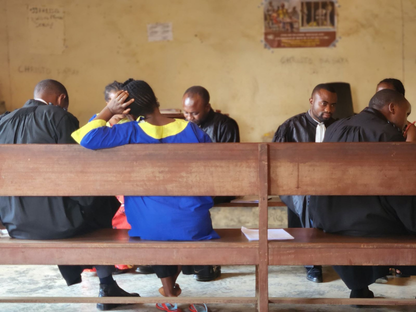
This op-ed was originally published in French on actualite.cd. As March, the month dedicated to women’s rights, comes to an end, the usual wave of celebrations has once again unfolded: commemorative fabrics distributed by the thousands, events organized back-to-back, and countless tributes paid to women. Yet, in ritualizing these moments, we risk losing sight of their purpose. March 8 was never meant to be a celebration, but a moment for reflection on past struggles, and more importantly, on the distance still to be covered to achieve genuine equality. Because despite significant legal and policy advances, the reality remains unchanged: at every stage of their lives, women continue to face forms of violence and injustice that limit their ability to fully exercise their rights and shape their futures. A recent video showing a doctor violently assaulting a woman moments after childbirth sparked widespread outrage. But beyond the shock, it reveals a deeper truth: such violence is not incidental. It reflects systemic patterns, embedded within social norms and institutional structures. If there is one group of women who bear the most severe consequences of these institutionalized forms of violence, it is women in detention, long overlooked in global conversations on gender equality. It is in this context that the 70th session of the Commission on the Status of Women (CSW70), held in New York from March 9 to 19, 2026, marks a significant milestone. For the first time in its 70-year history, the Commission’s agreed conclusions explicitly recognize women in detention and frame their situation as a core issue within the global women’s rights agenda. This recognition is all the more critical as the number of incarcerated women worldwide continues to rise faster than that of men, approaching one million. A Stark Reality for Women in the DRC In the Democratic Republic of Congo, the gap between legal frameworks and lived realities is particularly evident. Since 2023, Ius Stella has been providing free legal consultations to women detained in Makala prison in Kinshasa and Kangbayi prison in Beni, shedding light on patterns that remain largely absent from public debate. Many women are imprisoned for minor offenses or based on flawed legal classifications. Some face charges of breach of trust simply because they are unable to repay small loans, sometimes as little as $50. Others become entangled in property disputes: widows and women farmers may be imprisoned following land or family conflicts, highlighting the persistent fragility of women’s economic rights. More concerning still are cases where women are prosecuted in place of their abusers. A mother fleeing domestic violence with her children may be arrested for kidnapping at the request of her husband. In Beni, under a state of siege, women have also been detained in place of husbands accused of collaborating with armed groups, in an effort to force them to surrender. These are not isolated failures of the justice system. They reflect deeply rooted social norms in which women are not fully recognized as rights-bearing citizens equal to men. Consequences Beyond Individual Life Trajectories These injustices extend far beyond individual cases and have lasting consequences for society as a whole. When a woman is incarcerated, entire family structures are destabilized. Children are left without support, facing increased risks of dropping out of school, poverty, and social exclusion. In Beni, our legal consultations revealed that most detained women were single mothers. Among 77 women assisted, 245 children depended on them, some under the age of five, living in prison alongside their mothers. Due to stigma and social disruption, these impacts do not end with release. They continue to shape the life trajectories of these women, their children, and their communities. Making Justice Systems Work for Everyone The challenge for public authorities today is to design judicial mechanisms that effectively respond to the realities women face in accessing justice. Three priorities areas stand out. First, improving knowledge. Without reliable data on women’s legal needs, public policies remain disconnected from lived realities. This requires systematically documenting the barriers women face and the specific vulnerabilities that affect them. Ius Stella has begun this work through an exploratory study conducted during the 16 Days of Activism campaign, in collaboration with students from the Human Rights Club at the University of Kinshasa. But much more needs to be done. Second, improving accessibility. In many cases, the primary barrier to justice is not the absence of rights, but the lack of information and accessible recourse. Community-based legal aid systems, tailored to women’s economic and social realities, are essential. Third, rethinking the use of incarceration. The overuse of detention for non-violent offenses carries severe social and economic consequences. Expanding alternatives to imprisonment, particularly for mothers, can mitigate these harms without compromising the protective function of the law. Justice as a Lever for Change These challenges are not unique to the DRC or to Africa. They reflect a global issue: turning legal commitments into meaningful change in women’s lives. In this context, the DRC has an opportunity to lead by example, by adopting data-driven, people-centered reforms grounded in lived realities. Because access to justice is not only about protecting rights. It is a critical driver of transformation and progress for women, and for the societies they live in. Jessica, Founder of Ius Stella Join us today
US-DRC Critical Minerals Deal: When a Strategic Partnership Collides with the Constitution
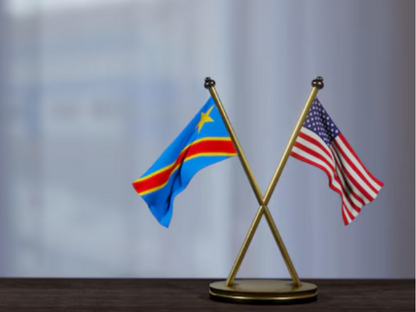
This analysis does not prejudge the outcome of the case currently pending before the Constitutional Court. Can an international agreement bind a State in the long term without respecting the Constitution on which it is founded? This question lies at the heart of the constitutional challenge brought before the Constitutional Court against the “Strategic Partnership Agreement between the Government of the United States of America and the Government of the Democratic Republic of the Congo” on cooperation in the area of strategic minerals, investments and sensitive infrastructure, signed on 4 December 2025. In January 2026, a group of Congolese lawyers, supported by several human rights organisations, filed an application before the Constitutional Court seeking to annul the agreement, arguing that it violates core constitutional principles on the protection of national sovereignty, equality before the law and the role of Parliament in ratifying international treaties. Beyond the political controversy, the issue is first and foremost a legal one and raises a fundamental question: how far can a State go in international cooperation without giving up part of its constitutional sovereignty? Five constitutional issues at stake To shed light on this debate, several key legal issues must be examined in light of the constitutional framework governing the DRC’s international action. 1) The Constitution as a compass for international partnerships In the Democratic Republic of the Congo, the conclusion of international agreements is not a matter left to the unfettered discretion of the President of the Republic. The Constitution strictly regulates a number of sensitive areas: public finances; the exploitation of strategic natural resources; commitments liable to affect national sovereignty. Constitutional review is therefore not a brake on development. It is a guarantee of legality and transparency, intended to protect the public interest against haste, opacity and abuses of power. 2) Natural resources: cooperation or de facto external control? Article 9 The State shall exercise permanent sovereignty notably over the soil, subsoil, waters and forests, over the Congolese airspace and the fluvial, lacustrine and maritime spaces, as well as over the Congolese territorial sea and continental shelf. The modalities for the management and concession of the State’s domain referred to in the preceding paragraph shall be determined by law. The agreement provides for the establishment of joint governance mechanisms, including decision-making bodies that operate “by consensus”. In comparable international agreements, such clauses often have the practical effect of giving each party a veto power over strategic decisions such as: approval of mining projects; directions for mineral exports; investment priorities. According to the provisions of the agreement that have been made public, these decisions are examined within mixed bodies responsible for supervising and validating implementation and endowed with operational powers. Such an arrangement raises a major constitutional question: does sharing strategic decision-making over natural resources amount to mere cooperation, or to a delegation of sovereignty? Under Congolese law, sovereignty over natural resources is a foundational principle. Cooperating does not mean renouncing the State’s own decision-making power. 3) Partial transfer of sovereignty: a strictly limited exception Article 217 The Democratic Republic of the Congo may conclude treaties or agreements of association or community involving a partial abandonment of sovereignty with a view to promoting African unity. In other words, the Constitution only allows a partial transfer of sovereignty in a very specific context: the promotion of African unity. Transferring decision-making powers to a binational body established with a non‑African State therefore raises a sensitive question: where does cooperation end and unconstitutional delegation of power begin? This debate goes far beyond the DRC–US agreement alone.It speaks more broadly to the way African States structure their strategic partnerships in a context of global competition for critical resources. 4) Equality before the law and fair competition Article 12 All Congolese are equal before the law and are entitled to equal protection by the laws. One of the issues raised by the applicants concerns the possible granting of preferential regimes to certain operators based on their nationality or their affiliation with the agreement, which would breach the principle of equality before the law. In practice, this could take the form of: specific tax exemptions; privileged access to mining projects; administrative or financial facilities not available to local or regional operators. In a State governed by the rule of law, such mechanisms prompt a fundamental question: can economic attractiveness justify differential treatment that risks undermining fair competition and sidelining national actors or other potential partners? 5) The role of Parliament as a democratic safeguard Article 214 Treaties of peace, treaties of commerce, treaties and agreements relating to international organisations and to the settlement of international disputes, those which commit State finances, those which modify legislative provisions, those relating to the status of persons, and those involving exchange or addition of territory may only be ratified or approved by virtue of a law. No cession, exchange or addition of territory shall be valid without the consent of the Congolese people expressed by way of referendum. Whenever international commitments fall within the realm of legislation (taxation, export quotas, public finances), parliamentary involvement is not optional: it is a democratic requirement. The issue is not merely procedural. Bypassing parliamentary ratification weakens the separation of powers and can create long‑term legal uncertainty, affecting both investors and citizens. Conclusion Similar debates have arisen in several African countries that have negotiated strategic agreements in the extractive or energy sectors. In Ghana, Zambia and Tanzania, for example, some international partnerships have been challenged on constitutional grounds, particularly regarding contract transparency, protection of national economic interests and compliance with parliamentary procedures. These experiences show that the question now facing the DRC goes beyond a single bilateral deal. It is part of a broader continental debate on the governance of natural resources, economic sovereignty and the role of law in development strategies. The issue is not whether to reject international cooperation. The DRC clearly needs robust, transparent and strategic partnerships to harness its resources and support economic transformation. The real question the Constitutional Court is called upon to answer is this: can a country build sustainable development by sidestepping its own
Beyond Prejudice: Addressing Mental Health Behind Bars in the DRC

On the occasion of World Mental Health Day, Irène Belanta Makuma graciously agreed to answer our questions for Ius Stella. Drawing on her experience as a psychologist, researcher, and advocate for vulnerable populations, she offers a powerful and compassionate perspective on the mental health crisis affecting prisoners and street children in the Democratic Republic of Congo. Her insights help us look beyond prejudice — and remind us that mental health is a right, not a privilege. Ius Stella: Can you tell us about your work providing psychological support to street children in the Democratic Republic of Congo (DRC), and the main mental health challenges these young people face? Irène Belanta Makuma: First, it’s important to understand that children living on the streets often find themselves in such conditions due to poverty, war, or other dire socio-economic circumstances. They have lived—and continue to live—through situations that disrupt their emotional balance and cause behavioral disturbances. The main mental health challenges these young people face include social exclusion and stigma, which prevent them from moving forward. Their basic rights—such as access to healthcare, food, and justice—are routinely violated. Our work focuses on being present regularly, building trust with them, accepting them as they are without judgment, offering a space for expression, and working with them to develop resilience. Our ultimate goal is to help them get back on their feet and nurture meaningful, positive change in their lives. As a mental health professional in the DRC, could you give us an overview of how mental health is generally perceived by the Congolese population, including stigma and common misconceptions? How does this affect your work and the services you provide? Generally speaking, for a large portion of the Congolese population, mental health remains a taboo topic within communities. People tend to believe that only individuals who are “crazy” or severely mentally ill need psychological help. Yet, mental health is a reality that affects everyone. This perception impacts our work as psychologists because it discourages people from seeking help from mental health professionals. Instead, they withdraw, keep their problems to themselves, and are overwhelmed by fear and shame. But the first step toward improving mental health is precisely to break down myths and misconceptions, shift our perspective, break barriers, and ask for help when needed. In fact, the sooner we seek help, the sooner we begin to feel better. Why is it essential to provide psychological support to prisoners—whether adults or minors—in the DRC? What specific mental health challenges do detainees face in the Congolese context? Prisoners, whether adults or minors, are deprived of their liberty and go through extremely difficult experiences that affect their mental health. Does the world even realize the conditions they live in while incarcerated? Prisons, which should serve as places for rehabilitation, have instead become sources of numerous abuses. Detainees endure inhumane conditions, marked by harassment and moral, physical, and sexual violence. They face stigma, discrimination, social exclusion, and a complete lack of respect for their fundamental rights. It is a mistake to believe that incarceration justifies such treatment. These forms of violence create invisible wounds that require intervention from mental health professionals. Psychological support provides them with a space to express themselves, to be heard by professionals who accept them without judgment, and to regain a sense of balance and purpose. Can you explain how the mental health of prisoners can affect their rehabilitation and reintegration into society after their release? The prison environment is generally harmful to detainees’ mental health—especially since many of them have already endured traumatic experiences before incarceration. The most commonly observed disorders include depression, anxiety, substance abuse, and various psychiatric conditions. Symptoms range from eating and sleep disorders to persistent sadness, loss of interest, behavioral issues (such as aggression or agitation), suicidal thoughts, and low self-esteem. When detainees receive appropriate support from mental health professionals, they are better equipped to manage the stress of incarceration and approach life with improved self-esteem. On the other hand, without this support, their mental health continues to deteriorate, which severely hinders their chances of successful reintegration into society after their release. In a country like the DRC, how can we raise greater awareness about the importance of mental health, whether for street children or other marginalized groups? Are there any community initiatives aimed at changing perceptions and promoting better mental health care in Congolese society? Mental health awareness in the DRC can be strengthened by involving all segments of the population, because mental health is everyone’s concern. Active community participation at all levels would encourage open discussions about mental health, help break down stereotypes, and motivate people to seek help when needed. It is also essential to make mental health care more available and accessible. There are some promising initiatives slowly moving in that direction, such as trainings, advocacy efforts, and awareness campaigns carried out in collaboration with community leaders and focal points, aimed at shifting perceptions and promoting mental health care in the DRC. Join us today
Welcome to our blog !

“It is from the ignorance of our rights that arbitrariness draws its greatest strength.” These words by Denis Langlois are at the heart of our blog, La Voix du Droit. The Democratic Republic of Congo (DRC) is a country of extraordinary beauty and diversity, but it also faces immense challenges when it comes to human rights and justice. The absence of a reliable, credible, and fair justice system is perhaps the biggest barrier preventing the DRC from achieving the peace and sustainable development it so urgently needs. Today, nearly 45,000 people—often the poorest and most vulnerable—are being held in Congolese prisons in a state of complete injustice. Unaware of their rights, nearly 80% of them are in pretrial detention, far beyond legal limits, and have never had access to a lawyer. Educate to Liberate With our blog, La Voix du Droit, our goal is simple: to educate in order to liberate. We believe that legal awareness is one of the most powerful tools to fight injustice and arbitrariness. We firmly believe that by educating people about their rights—and about the responsibilities of the State toward them—they can become empowered and better equipped to resist oppression. Voices That Matter This blog aims to be a trusted source of objective and accessible information on legal developments and justice-related issues in the DRC. Here, you’ll find much more than just articles. Our legal experts will share insights and analysis to help you better understand the realities of the Congolese legal and prison systems. But you’ll also read the stories of people we’ve supported—during their time in prison and after their release. We hope these stories of resilience will inspire you to join us in making the rule of law a reality in our country. One article at a time. One voice at a time. Jessica, Founder of Ius Stella Join us today