
This analysis does not prejudge the outcome of the case currently pending before the Constitutional Court.
Can an international agreement bind a State in the long term without respecting the Constitution on which it is founded?
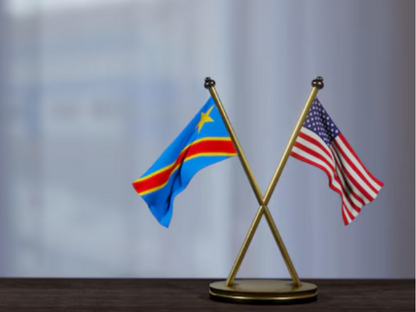
This question lies at the heart of the constitutional challenge brought before the Constitutional Court against the “Strategic Partnership Agreement between the Government of the United States of America and the Government of the Democratic Republic of the Congo” on cooperation in the area of strategic minerals, investments and sensitive infrastructure, signed on 4 December 2025.
In January 2026, a group of Congolese lawyers, supported by several human rights organisations, filed an application before the Constitutional Court seeking to annul the agreement, arguing that it violates core constitutional principles on the protection of national sovereignty, equality before the law and the role of Parliament in ratifying international treaties.
Beyond the political controversy, the issue is first and foremost a legal one and raises a fundamental question: how far can a State go in international cooperation without giving up part of its constitutional sovereignty?
Five constitutional issues at stake
To shed light on this debate, several key legal issues must be examined in light of the constitutional framework governing the DRC’s international action.
1) The Constitution as a compass for international partnerships
In the Democratic Republic of the Congo, the conclusion of international agreements is not a matter left to the unfettered discretion of the President of the Republic.
The Constitution strictly regulates a number of sensitive areas:
- public finances;
- the exploitation of strategic natural resources;
- commitments liable to affect national sovereignty.
Constitutional review is therefore not a brake on development. It is a guarantee of legality and transparency, intended to protect the public interest against haste, opacity and abuses of power.
2) Natural resources: cooperation or de facto external control?
Article 9
The State shall exercise permanent sovereignty notably over the soil, subsoil, waters and forests, over the Congolese airspace and the fluvial, lacustrine and maritime spaces, as well as over the Congolese territorial sea and continental shelf. The modalities for the management and concession of the State’s domain referred to in the preceding paragraph shall be determined by law.
The agreement provides for the establishment of joint governance mechanisms, including decision-making bodies that operate “by consensus”. In comparable international agreements, such clauses often have the practical effect of giving each party a veto power over strategic decisions such as:
- approval of mining projects;
- directions for mineral exports;
- investment priorities.
According to the provisions of the agreement that have been made public, these decisions are examined within mixed bodies responsible for supervising and validating implementation and endowed with operational powers.
Such an arrangement raises a major constitutional question: does sharing strategic decision-making over natural resources amount to mere cooperation, or to a delegation of sovereignty?
Under Congolese law, sovereignty over natural resources is a foundational principle. Cooperating does not mean renouncing the State’s own decision-making power.
3) Partial transfer of sovereignty: a strictly limited exception
Article 217
The Democratic Republic of the Congo may conclude treaties or agreements of association or community involving a partial abandonment of sovereignty with a view to promoting African unity.
In other words, the Constitution only allows a partial transfer of sovereignty in a very specific context: the promotion of African unity.
Transferring decision-making powers to a binational body established with a non‑African State therefore raises a sensitive question: where does cooperation end and unconstitutional delegation of power begin?
This debate goes far beyond the DRC–US agreement alone.
It speaks more broadly to the way African States structure their strategic partnerships in a context of global competition for critical resources.
4) Equality before the law and fair competition
Article 12
All Congolese are equal before the law and are entitled to equal protection by the laws.
One of the issues raised by the applicants concerns the possible granting of preferential regimes to certain operators based on their nationality or their affiliation with the agreement, which would breach the principle of equality before the law.
In practice, this could take the form of:
- specific tax exemptions;
- privileged access to mining projects;
- administrative or financial facilities not available to local or regional operators.
In a State governed by the rule of law, such mechanisms prompt a fundamental question: can economic attractiveness justify differential treatment that risks undermining fair competition and sidelining national actors or other potential partners?
5) The role of Parliament as a democratic safeguard
Article 214
Treaties of peace, treaties of commerce, treaties and agreements relating to international organisations and to the settlement of international disputes, those which commit State finances, those which modify legislative provisions, those relating to the status of persons, and those involving exchange or addition of territory may only be ratified or approved by virtue of a law.
No cession, exchange or addition of territory shall be valid without the consent of the Congolese people expressed by way of referendum.
Whenever international commitments fall within the realm of legislation (taxation, export quotas, public finances), parliamentary involvement is not optional: it is a democratic requirement.
The issue is not merely procedural. Bypassing parliamentary ratification weakens the separation of powers and can create long‑term legal uncertainty, affecting both investors and citizens.
Conclusion
Similar debates have arisen in several African countries that have negotiated strategic agreements in the extractive or energy sectors. In Ghana, Zambia and Tanzania, for example, some international partnerships have been challenged on constitutional grounds, particularly regarding contract transparency, protection of national economic interests and compliance with parliamentary procedures.
These experiences show that the question now facing the DRC goes beyond a single bilateral deal. It is part of a broader continental debate on the governance of natural resources, economic sovereignty and the role of law in development strategies.
The issue is not whether to reject international cooperation. The DRC clearly needs robust, transparent and strategic partnerships to harness its resources and support economic transformation.
The real question the Constitutional Court is called upon to answer is this: can a country build sustainable development by sidestepping its own Constitution?
Our position is clear: sustainable development rests on legal certainty, institutional transparency and respect for constitutional principles. In a context of global competition for strategic resources, the Constitution should not be viewed as an obstacle to progress, but as the foundation that guarantees its legitimacy, stability and sustainability. It is also a crucial tool to ensure that national wealth truly contributes to shared prosperity, benefiting all Congolese women and men.
Because genuine development is not measured solely by economic growth or investment flows, but by a State’s ability to turn its resources into fair opportunities, rights protection and tangible improvements in people’s lives.

David Muyombwe, Lawyer (Kinshasa/Matete Bar)