
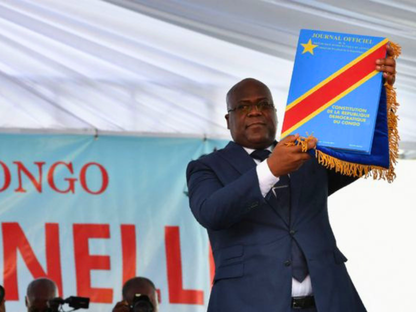
For months, public debate in the Democratic Republic of the Congo has revolved around a single question: should the Constitution be amended? Yet one far more fundamental question has received surprisingly little attention: what problem is this reform actually intended to solve? From Ouagadougou to Nairobi, Africa’s constitutional experience offers an important lesson. Constitutional reform, in itself, guarantees neither progress nor stability. When it is not grounded in a rigorous diagnosis of the challenges a country faces and supported by an inclusive process, it can become a source of instability rather than a solution.
Introduction
Constitutional reform has become one of the defining issues in public debate in the Democratic Republic of the Congo.
Positions are becoming increasingly polarized and concerns are mounting. For some, the 2006 Constitution no longer responds to the country’s contemporary challenges and should therefore be revised to improve the effectiveness of public action. For others, it remains one of the country’s main safeguards against the abuse of power, and any amendment to the constitutional framework risks weakening the democratic balance established over the past two decades.
This debate is normal, legitimate and, indeed, healthy in any democracy. A constitution is neither immutable nor untouchable. Every democracy may, at times, need to adapt its institutions as circumstances evolve.
But before debating reform, one question should come before all others: What problem is this reform intended to solve?
At first glance, the question may seem self-evident. Yet it is rarely at the heart of the public conversation. The debate often begins with the proposed solution long before there is any agreement on the nature of the problem.
However, a proper diagnosis should come before the solution. A physician does not prescribe treatment before making a diagnosis. Why should it be any different when it comes to the fundamental pact that governs the life of a Nation?
This article does not seek to argue either for or against constitutional reform. Instead, it invites readers to shift the debate towards a more fundamental question: how can we determine whether constitutional reform is genuinely necessary? Drawing on the Congolese debate as well as the experiences of other African countries, it argues that before changing the rules of the game, a democracy must first reach a shared understanding of the problem it is trying to solve.
I. The Congolese Constitutional Debate: A Solution in Search of Its Problem
In the DRC, the Constitution now seems to bear the weight of every national frustration: when institutions fail to deliver the expected results, when governance falls short, when insecurity persists, or when development continues to fall below citizens’ expectations.
After nearly two decades of implementation, it is only natural that citizens, academics, political leaders and civil society organizations should question how certain institutions function and whether some constitutional mechanisms remain fit for purpose.
These debates often lead to the same fundamental question: are the challenges facing the country rooted in its constitutional framework?
This is a legitimate question. But it also calls for a rigorous methodology. Not every difficulty a State faces is necessarily constitutional in nature. It would therefore be dangerous to use the Constitution as a convenient scapegoat when the real causes of the country’s challenges lie elsewhere.
This is particularly important because constitutional reform is not an ordinary undertaking. It affects the political pact that binds institutions together, organizes the exercise of public power and guarantees the fundamental rights of citizens.
Before considering any constitutional reform, a rigorous diagnosis must first be undertaken. Several questions should therefore be asked:
- What are the specific institutional shortcomings that have been identified?
- Do they stem directly from the Constitution itself, or from the way it has been implemented?
- Have the existing constitutional mechanisms been fully implemented?
- Which constitutional provisions are actually concerned?
- How would amending those provisions help address these challenges?
These questions should logically form the starting point of any discussion on constitutional reform. Yet, in the Congolese public debate, they often remain secondary to discussions focused on political actors and their presumed intentions rather than on the constitutional framework itself.
The risk, then, is that an institutional debate becomes a political confrontation.
A constitution is not designed to respond to the concerns of a particular political majority or a single generation of leaders. It is intended to outlast them all by providing a durable framework for the exercise of power. Any amendment to this fundamental pact therefore requires more than a response to the political circumstances of the moment. It demands a clear and rigorous demonstration of its necessity.
The real question, therefore, may not yet be whether the Constitution should be revised. It is whether the challenges we face today reveal the limits of the Constitution itself or rather the limits of the way we have chosen to implement and uphold it.
II. The Congolese Paradox: An Ambitious Constitution, Yet a Fragile State
Like any fundamental law, the Congolese Constitution is neither perfect nor immutable. Some of its provisions can legitimately be debated, clarified or adapted in light of experience. But before examining its possible shortcomings, it is worth recalling a reality that is often overlooked in today’s public debate: in terms of its ambition, the Congolese Constitution is a remarkably comprehensive document.
It enshrines the separation of powers, guarantees a broad range of fundamental rights and freedoms, provides for decentralization, establishes mechanisms of oversight and checks and balances, safeguards political pluralism, and affirms both the sovereignty of the people and the rule of law. It does more than allocate powers among institutions; it embodies a genuine vision of the State, democracy and governance.
On paper, this institutional architecture is ambitious.
Yet the experience of the past two decades paints a more nuanced picture. Insecurity continues to affect parts of the country. Public confidence in several institutions remains fragile. Political tensions regularly resurface during electoral periods. Citizens’ expectations in terms of justice, governance and development continue to far exceed the results achieved.
This is the heart of the Congolese paradox.
How can a Constitution with such an ambitious democratic vision coexist with institutions that still struggle to deliver on its promises?
Two explanations are possible.
The first is that these shortcomings reveal weaknesses in the Constitution itself and therefore call for constitutional reform.
The second is that they stem less from the constitutional text than from the way institutions function, from political practices, or from the incomplete implementation of mechanisms that the Constitution already provides.
This second hypothesis deserves particular attention.
A constitution never governs in place of those entrusted with governing. However well drafted, no constitutional text can, by itself, produce the outcomes it promises. A constitution establishes a framework, sets out guiding principles and defines the rules of the game. But it cannot, on its own, guarantee good governance, institutional integrity, administrative effectiveness or political stability.
In other words, a constitution can never substitute for the collective commitment to uphold the rules it establishes.
Between the principles set out in the Constitution and their implementation in practice lies a decisive space: the space of institutional practice, public leadership and political culture. It is often within that space that the success or failure of a democracy is ultimately determined.
From this perspective, the Congolese challenge may be less constitutional than institutional.
It begins with our relationship to the State. In a democracy, institutions are designed to be greater than the individuals who lead them. Presidents come and go. Governments come and go. Parliamentary majorities come and go. The State endures. Yet Congolese political debate too often gives the impression that the credibility of institutions depends more on the individuals who temporarily occupy them than on the permanence of the institutions themselves. When an institution is perceived as an extension of political power rather than as a public good, it becomes vulnerable to political alternation and the passions of the moment, weakening its authority over time.
The challenge also lies in our relationship with the rule of law. The rule of law is not measured by a society’s willingness to respect the rules when they serve its interests. It is measured by its willingness to respect them even when they are restrictive or politically inconvenient. That commitment to the rule of law, regardless of circumstance, is what ultimately builds a genuine institutional culture.
Finally, it invites a more fundamental reflection: have we fully made use of the mechanisms that the Constitution already provides? Do the institutions it establishes have the resources, independence and public confidence they need to fulfil their mandate? Have all the implementing reforms required to give full effect to the Constitution actually been carried out?
These questions are not intended to shield the Constitution from criticism. They simply remind us that before concluding that the rules themselves are inadequate, we should honestly examine how they have been implemented.
A constitution can always be amended. But no constitutional reform will ever substitute for strong institutions, sound democratic practices and a culture of constitutionalism. Without them, even the best-designed constitutional rules remain little more than words on paper.
This is precisely what the experience of several African countries demonstrates. While some constitutional reforms have helped strengthen institutions, others have shown that changing the Constitution alone cannot resolve problems whose root causes lie elsewhere. Still others have demonstrated that constitutional reforms driven primarily by political interests can themselves become a source of instability.
III. From Ouagadougou to Nairobi: What Africa's Experience Teaches Us About Constitutional Reform
The debate currently taking place in the DRC is far from unique. At different moments in their history, many African countries have grappled with the same question: should their institutions be reformed to respond to political crises, social change or new democratic aspirations?
Kenya offers a first illustration.
The 2010 Constitution was the culmination of a process that had begun long before the post-election violence of 2007–2008. That crisis, which claimed more than a thousand lives, accelerated an ongoing national reflection on the weaknesses of the country’s political system. Under the mediation of Kofi Annan, Kenya’s political leaders agreed that the root causes of the violence—including the excessive concentration of presidential power, weak checks and balances, and deep ethnic divisions—had to be identified before embarking on constitutional reform. The new Constitution was therefore the product of several years of broad national consensus and public consultation, rather than a simple desire for change.
At the same time, Kenya’s experience demonstrates that a new Constitution cannot, by itself, resolve a country’s underlying challenges. Sixteen years after its adoption, Kenya continues to face political tensions and significant governance challenges. The Constitution strengthened the country’s institutional framework, but it did not replace the much longer process of building stronger institutions and consolidating democratic practice.
Ghana illustrates a different approach.
Since the adoption of its 1992 Constitution, Ghana has experienced multiple democratic transitions, electoral tensions and economic challenges. Yet rather than fundamentally rewriting its constitutional settlement, the country has focused on gradually strengthening its institutions. When a Constitutional Review Commission was established in 2010, its purpose was not to start from scratch, but to assess how the Constitution had functioned after nearly two decades of implementation through an extensive national consultation process. Ghana’s experience demonstrates that democracies can also be strengthened through the gradual improvement of institutional practice, respect for existing constitutional rules and the steady consolidation of public institutions.
Conversely, some constitutional reforms have deepened the very crises they were intended to address.
Burkina Faso provides a striking example. In 2014, an attempt to amend the Constitution to allow President Blaise Compaoré to seek another term in office triggered a popular uprising that brought an end to his twenty-seven years in power. Rather than addressing a clearly identified institutional problem, the proposed reform precipitated a major political crisis whose consequences continue to shape the country’s stability.
A clear lesson emerges from these three experiences: constitutional reform is neither a guarantee of progress nor a threat in itself. Its legitimacy depends on the quality of the diagnosis that justifies it, the objectives it seeks to achieve, and the confidence citizens place in the process through which it is carried out.
This is precisely the lesson that should inform the constitutional debate in the DRC.
Conclusion: A Constitution Is a Response, Not a Starting Point
No constitution is sacred. No human endeavour is perfect. No society stands still.
History shows that institutions—and the constitutional framework that governs them—must sometimes adapt to changing times, evolving social realities, economic transformations and the new challenges that societies inevitably face.
The real question, therefore, is not whether the Constitution should be revised.
The real question is whether we have clearly identified what we expect it to achieve.
Rather than pitting supporters of constitutional reform against its opponents, the debate should shift its centre of gravity: away from the reform itself and towards the problem it is intended to solve.
Constitutional reform is never an end in itself. It is a means of advancing a broader collective project.
A Nation does not amend its fundamental pact simply because it seeks change. It does so when it has clearly identified the limits of its existing institutions and is convinced that new constitutional rules offer the most appropriate response.
But such a reflection also requires collective honesty. Before concluding that our Constitution is inadequate, we must ask ourselves whether we have fully given effect to the institutions it has already created, whether we have been willing to respect the rules it establishes, and whether we have consistently applied them in practice.
Ultimately, a constitution is never the starting point. It is a response. And like any response, its relevance depends on the quality of the question it is intended to answer.

David Muyombwe, Lawyer (Kinshasa/Matete Bar)